
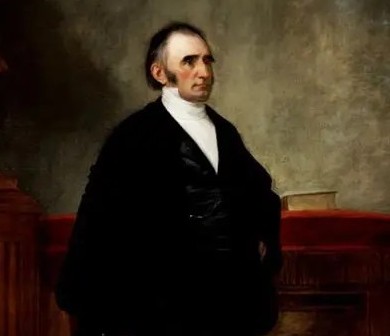
Francis Wayland (March 11, 1796 – September 30, 1865)
I first heard of Francis Wayland years ago. It was in an online blog, and that was enough to pique my interest. Of course, the fact that he was a Baptist drew me in as well.
I believe that Baptist history is essential, and, as much as we can, we should study the great stalwarts of faith who went before us. Individual Soul Liberty, the First Amendment here in America, is a direct result of many great Baptists, like Roger Williams, John Clark, Obadiah Holmes, Elder Leland, and many, many others.
I am grateful for my contemporaries who have kept the history of our forebears alive through their journals, reviews, books, and honorable mentions. Baptists have lost their way today because they have forgotten where they came from.
Francis Wayland (1796 – 1865) was the son of a Baptist preacher. Wayland graduated from Union College and studied medicine before transitioning his studies to that of ministry. He held pastorates here in Boston at First Baptist Church and in Providence, Rhode Island, where Roger Williams had pastored. His tenure as President of Brown University lasted from 1827 to 1855. It is said he led sternly, leaving no place for foolishness, but also opened the door for increased learning and established new helpful standards for those wishing to study there.
He held firmly to Baptistic principles (he was known as “Mr. Baptist” for his influence as an educator, writer, and preacher).
He was absolute in his conviction that the Bible was to be the only authority for life and practice, and an advocate for liberty. He advocated for temperance and opposed slavery. His life, ministry, and their impact are well worth digging into.
Take, for example, Lecture II – Baptist Views of the Trinity, The Law, Human Depravity, the Atonement, Particular and Standard in his work – Notes on the Principles and Practices of Baptist Churches
Wayland starts this lecture off with – “The theological tenets of the Baptists, both in England and America, are emphatically the doctrines of the Reformation and have been held with singular unanimity and consistency.”
He then goes on to highlight some of the key points of doctrine.
They were Trinitarian – They uphold without reservation that there is only one living and true God, and is revealed to as Father, Son, and the Holy Spirit. A doctrine still held tenaciously today and, in my opinion, more vigilance in defending as I have seen some aspects of modalism in some circles.
The Views on the Law – They believed the Law required perfect obedience and without which no one could be saved. They believed all have broken the law and the whole world is guilty before God
Human Depravity – Depravity was the result of Adam’s sin and rebellion before God. Baptists believed without question in universal guilt and condemnation. They held to no distinction all were condemned apart from the grace of God.
The Atonement, Particular and General – The views on salvation are consistent with many of today’s Baptist churches and that salvation is impossible through works, the only hope of eternal life rest solely upon the Lord Jesus Christ. Wayland correctly states that “justification by works is absolutely impossible, and the whole world is guilty before God.
I think his convictions, as far as the extent of the Atonement in Particular and General terms, were thoughtful. He states that at one point Gill’s Divinity was the standard, and those who followed Gill were referred to as Hyper-Calvinists. Then a shift occurred when Fuller’s work, Gospel Worthy of all Acceptation, was published (a book I would highly recommend). This would become almost the norm amongst the Baptist brethren. It is said of Fuller’s Calvinism that he was moderate.
Wayland observes that – “In 1793, according to Asplund, 92% of Baptists in America were Particular Baptists and they held to Limited Atonement.” Notes on the Principles and Practices of Baptist Churches ~ Introduction
Church History is crucial if we are to understand our roots, especially as Baptists.
Wayland states that while there were differences in the Baptists, and that although their convictions about the extent of the Atonement varied, the men whose hearts were set on fire with the love of God preached Christ, had heartfelt burdens for lost souls, and were gracious towards each other despite those differences.
While I have only read one of his books, two others came with high praise: The Elements of Political Economy, published in 1837, and Elements of Moral Science, published in 1835 and republished by Harvard University in 1963. I heard high praises for – The Elements of Political Economy. While I only caught snippets of this work, I can say our modern political system would not favor rugged individualism when it came to fiscal (government or personal) responsibility.
Pastor Chereghin Nettleton versus Finney pg. 63 had this testimonial concerning Wayland’s view on one of the great revival preachers during the Second Great Awakening – Asahel Nettleton –
“Francis Wayland, president of Brown University, considered Nettleton to be one of the two best preachers of his generation. He was a solid doctrinal preacher. “
Wayland describes the preaching and the fruit of Nettleton’s revival like a “surge of evangelical power had touched his own soul” pg. 92 Wayland’s sons said this of their father after he heard Nettleton: “His spirit received a quickening impulse, whose influence never ceased to be felt, and he gained lessons never to be forgotten in the mode of addressing men on religious subjects.” Pg. 93 God Sent Revival
Wayland, speaking of Nettleton’s labors, addressed the revivals that took place under his meetings – “The region was overspread by a resurgence of religion, primarily through the labors of Nettleton, it spread to Schenectady and entered the college. There was a powerful impression made upon the students, and many were converted. One result of the awakening was the establishment of daily evening prayer meetings at the college. This was directed under Wayland.”
Francis Wayland’s writing career spanned over 40 years, with over 72 books, sermons, and addresses. His time and contributions to education alone, especially during his presidency of Brown University, are worth studying.
It is interesting to me that he receives fewer honorable mentions than some of the great movers and shakers in church history. I guess this is par for the course, since much of the history of this world and the church is being rewritten.
While this is just a snapshot of his life, my desire is that it may pique interest in further study, as it did me when I first heard about him.
 Just a preacher's blog