
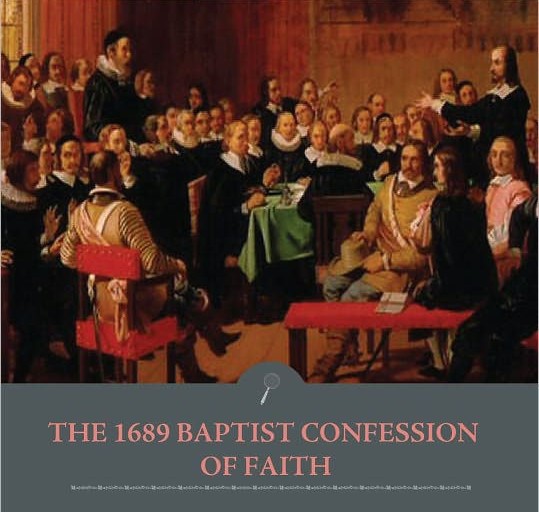
It has become my mission to read through and study the 1689 Baptist Confession of Faith. At some point, I will be teaching a formal Sunday School Class on it and confessions in general.
While the Bible is always the Standard and the Confessions are always in subjection to it, they are important for their historical and theological significance. One way to look at their importance is that Creeds consist of the fundamental doctrines of Christianity, especially concerning the doctrine of the Trinity, the person and work of Christ, the nature of the church, and many other foundational doctrines.
The confessions were a way to help identify the camp you were with and articulate doctrine.
For this blog, I want to talk about the nature of God, or at least one aspect of it, and that is his SUBSISTENCE, or to use another term, the aseity of God.
In the 2nd Chapter of the Confession, Of God and the Holy Trinity, the word “subsistence” is used to describe God. What does it mean and why is it important to our understanding of God?
People perish for lack of knowledge, especially regarding what we know about God and his nature. What we understand as theological, or in terms of “theology proper,” does matter. How we view the world, ourselves, the church, man, and our future will be determined by our understanding of God. The foundation of our hope, security, and peace comes with our understanding of God’s character. He is, without a doubt, a balanced being, and with that comes our assurance and confidence.
The 2nd Chapter 1st paragraph says “The Lord our God is but one only living and true God;1 whose SUBSTISTENCE is in and of Himself…”
The word used to describe God here is subsistence (The word aseity has a similar meaning), meaning that God is self-sufficient and self-sustaining. This, by the way, includes all three persons in the Godhead while all the while they remain in perfect unity.
James Renihan, in his seminal work on the 1689 Confession, quotes this on the word subsistence: “The property by which an entity is capable of existing per se, in itself, or in its own right. It focuses on the aspect of the independence of the existence of what there is.” pg 83 To the Judicious and Impartial Reader
Entymology.com has this definition: “actual existence, real being,” from Late Latin subsistentia “substance, reality.”
Latin subsistentia is a loan-translation of Greek hypostasis [remember hypostatic union] “foundation, substance, real nature, subject matter.”
What does this mean for the people of God? Consider with me that because of the SUBSISTENCE of God Christians:
Can know that God is the uncaused (no gods before or after him) cause of all things. All things exist and are sustained by him who upholds all things by the word of his power.
Can feel secure knowing that while God is self-sufficient, he is to the believer sufficient for all things providentially and sovereignly. God is answerable to no one; therefore, he can do as he wills.
Can be comforted that God is unchanging (immutable) and can be relied upon in all matters concerning faith and life. He is unchanging in his grace, mercy, love, etc.
Can see and appreciate God’s grace and mercy, since he needs nothing from his creation; all that we receive at his hand is truly free and unconditional.
Can appreciate and find hope in his promises as no one can move him away from what he has promised to his elect.
Studying Theology Proper puts things right and gives hope and encouragement to the people of God. We follow a perfect being who is unchanging and sovereign overall. Until next time, Happy Fourth!

